|
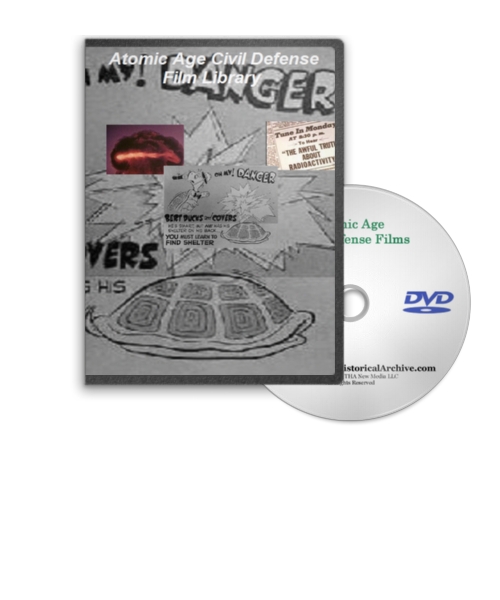
This classic collection of Civil Defense films were mostly created during the height of the cold war in the 1950's when there was a communist behind every bush and Nuclear War was going to happen at any instant. Fallout shelters were all the rage and Duck and Cover was shown in every classroom across the country.
The films are both educational and entertaining as they are immersed in the knowledge and values of the 50's. You will learn how to defend yourself in the case of a gas attack (which may actually be good to know nowadays), how to hide in case The Bomb is dropped, how to deal with a nuclear fallout situation, what can be used as a fallout shelter, how to deal with an atomic or gas attack at home, learn how a city should be evacuated during an emergency and much more.
Many of the films have great shots of early nuclear testing explosions.
|
Here are all the films that make up this historical collection:
Duck and Cover (1951)
This famous Civil Defense film has Bert the Turtle showing children what to do in case of atomic attack.
The film starts with an animated sequence, showing an anthropomorphic turtle walking down the road. A chorus sings the Duck and Cover theme:
There was a turtle by the name of Bert
and Bert the turtle was very alert;
when danger threatened him he never got hurt
he knew just what to do...
He ducked! [inhalation sound]
And covered!
Ducked! [inhalation sound]
And covered!
While this goes on, Bert is attacked by a monkey holding a string from which hangs a lighted firecracker. Bert ducks into his shell in the nick of time, as the firecracker goes off and blows up both the monkey and the tree he is sitting in. Bert, however, is shown perfectly safe, because he has ducked and covered.
The film, which is about 10 minutes long, then switches to live footage, as a narrator explains what children should do "when you see the flash" of an atomic bomb. The movie goes on to suggest that by ducking down low in the event of a nuclear explosion, the children would be safer than they would be standing, and explains some basic survival tactics for nuclear war. Not as good as a fallout shelter but the powers that be figured any positive steps are good steps.
Producer: Archer Productions, Inc.
Audio/Visual: Sound, Black & White
Run time: 9:15
|
The House in the Middle (1954)
This film is a demonstration of how a clean house survives an atomic blast better than a dirty house. The film is set at the Nevada Proving Grounds where they build a small town of houses in various conditions and with various materials in and around them before the blast. They then go back after the blast and examine the survivability of each of the houses. And of course it shows that a clean house survives an atomic attack better than a dirty house.
Producer: National Paint, Varnish and Lacquer Association
Audio/Visual: Sound, Color
Run time: 12:09
|
A Day Called X
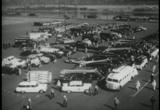  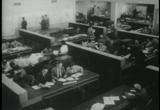
Imagine that a large city received advanced notice of a nuclear attack (or in today's vernacular - a terrorist attack.) This film, narrated by Glenn Ford, shows the dramatized evacuation of Portland, Oregon when faced with the prospect of a nuclear attack. The film flows very well and actually demonstrates how a well planned evacuation can be achieved in a timely manner while keeping its citizens safe.
Producer: CBS Television Network
Audio/Visual: Sound, Black & White
Run time: 27:11
|
What to Do in a Gas Attack (1942)
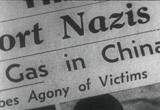 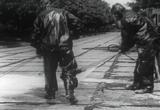 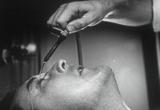
This film explores what poison war gases are, how they can be used to harm civilian populations and steps that can be taken in preparation, during and after a gas attack to stay safe and to minimize damage if you are exposed to a harmful gas. Films like this are interesting because they were fairly commonplace during the war and after it during the cold war. But in modern times, there doesn't seem to be any equivalent civil defense films being produced to educate the people on what to do in a terrorist attack situation.
Producer: Filmedia Corp.
Audio/Visual: Sound, Black & White
Run time: 13:52
|
About Fallout (1963)
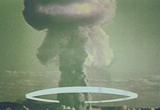 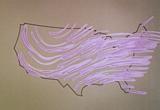 
This film examines what happens in the aftermath of a nuclear explosion. It discusses radiation dispersion patterns, the effects of fallout vs distance from the explosion, how it affects food and the human body, fallout shelters and much more. The film describes the importance of proper radiation fallout shelters and effective decontamination measures.
Producer: U.S. Department of Defense, Office of Civil Defense
Audio/Visual: Sound, Color
Run time: 22:25
|
Atomic Alert (Elementary version) (1951)
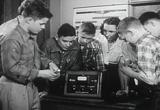  
This civil defense film explains to elementary school students the steps to take in the case of an atomic attack in their neighborhood. It covers all the typical scenarios and environments of a typical child - at home, playing in the playground and at school. It also gives a simple explanation of how an atomic bomb explodes.
Producer: Encyclopaedia Britannica Films
Audio/Visual: Sound, Black & White
Run time: 10:13
|
Your Chance to Live: Earthwatch (1972)
Discover the power of natural disasters as this film gives the story of a young couple who are caught in a tsunami while it explains the power of earthquakes and the longer term consequences of them in certain situations.
Producer: Screenscope
Audio/Visual: Sound, Color
Run time: 12:12
|
Radiological Defense (1961)
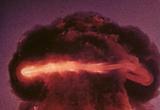 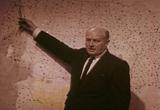 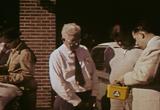
A frank discussion on nuclear fallout and the damage it can cause from an attack on the Untied States. One of the more stark civil defense films created in the Cold War.
Producer: U.S. Office of Civil Defense
Audio/Visual: Sound, Color
Run time: 26:17
|
Survival Under Atomic Attack (1951)
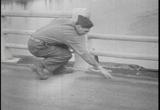 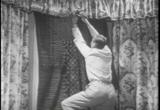
Explores methods someone can use to protect himself from the dangers of radiation from an atomic bomb if caught in the open or in the home. This is a classic do it yourself civil defense educational film when more robust facilities, like a fallout shelter, are not available.
Producer: U.S. Office of Civil Defense
Audio/Visual: Sound, Black & White
Run time: 8:45
|
Operation Cue (1964)
  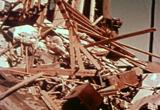
Operation Cue is narrated by reporter Joan Collin, who shares the sights she witnesses first-hand while observing the APPLE-2 test. From the planning phase through an actual visit to the site after the detonation, she shows viewers the potential results of the explosion and effective ways of sheltering people from the effects of a nuclear blast.
Electrical power experiments included setting up poles, lines, transformers, and a complete substation and observing the thermal and blast effects. Effects are studied on two radio towers and transmitters, a liquefied petroleum and natural gas facility with propane storage tanks, five types of completely furnished houses, rows of mannequins with standard clothing, and canned and packaged food. Spectacular footage shows the awesome destructive power of a nuclear explosion.
Producer: U.S. Department of Defense, Office of Civil Defense
Audio/Visual: Sound, Color
Run time: 14:02
|
About Fallout (1955)
This civil defense film examines what happens in the aftermath of a nuclear explosion. It discusses radiation dispersion patterns, the effects of fallout vs distance from the explosion, how it affects food and the human body and shelters and much more. The film describes the importance of proper radiation fallout shelters and effective decontamination measures. This is the original 1955 version and is not as complete as the more modern version shown in another section of this anthology due to our growing understanding of radiation from 1955 to 1963.
Producer: Wilding Picture Productions, Inc.
Audio/Visual: Sound, Color
Run time: 8:20
|
Our Cities Must Fight (1951)
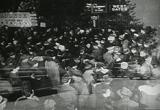 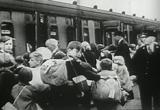
Be prepared is the motto of this civil defense film. It is a scare film designed to keep Americans alert, prepared and educated in the case of an enemy attack. Shows footage of war destruction in Europe, evacuation drills and much more.
Producer: Archer Productions, Inc.
Audio/Visual: Sound, Black & White
Run time: 9:00
|
News Magazine of the Screen: Atomic Energy
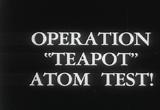 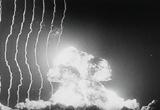 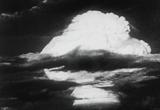
Good collection of 1950s news stories on atomic weapons , civil defense and nuclear energy.
Producer: Warner Path? News
Audio/Visual: Sound, Black & White
Run time: 21:26
|
Medical Aspects of Nuclear Radiation (1950)
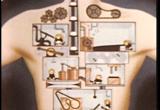 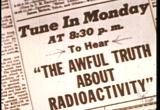 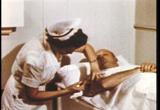
Through animation and storytelling, this film explore the effects of radiation and the heat blast of a nuclear blast on the human body. It is based on knowledge of atomic radiation in 1950 which is a bit different than the knowledge that we now have.
Producer: Cascade Pictures of California
Audio/Visual: Sound, Color
Run time: 20:14
|
|